
The inclusion of women on the digital scene has ceased to be a development agenda but a macroeconomic necessity. The recent world estimates indicate that bridging the digital divide and use between the sexes may unlock as much as 5 trillion dollars of extra global GDP. That size is approximately the size of the Japanese economy and it highlights the structural burden of the opportunity.
The benefits are especially geared towards low and middle-income countries, whereby women entrepreneurs make up an important part of informal and micro-enterprise activity. However, even with the growing number of smartphone users, almost half of female entrepreneurs in these markets say that they have slow or no access to the internet. Subsequent UN estimates in 2025 showed the global output could grow by 1.5 trillion by 2030 with a reduction in the gender digital divide, and up to 30 million women out of poverty.
Recently, Dhivya O’Connor of the Cherie Blair Foundation of Women pointed out that digital exclusion is no longer an outer edge of business success. With e-commerce, fintech, and AI-driven platforms determining access to the market, being locked out of digital processes is a sure way of reducing revenue streams and shrinking scaleability. Competitiveness has consequently become inseparable with the economic argument.
Structural Barriers Limiting Access
One of the most enduring challenges is affordability. Lack of income inequality Women in low-income economies have dis-proportional income disparities, and smartphones, data plans, and dependable broadband are more costly. It is aggravated by inadequate infrastructure in rural areas that have left most women reliant on common gadgets or unreliable connections.
The mobile internet usage disparity between the genders is about 15% worldwide and it means that fewer people have access to digital payments, supply chain platforms, and online marketplaces. In the case of women-led enterprises, this is a limitation to being included in more formalized digital economies, which are becoming more characteristic of trade flows in 2025.
Online Safety And Digital Trust
Gaining access does not necessarily mean meaningful participation. According to surveys carried out during recent years, over a half of female entrepreneurs have faced some type of online harassment or gender-based digital harassment. These risks are deterring the use of platforms that are open to the general population and lessen the desire to develop businesses online.
Policy deliberations on online abuse at OECD in 2025 have stressed that regulatory protection against online abuse is not only social but economic facilitator. Digital safety is necessary; otherwise, connectivity investment may not perform optimally due to the lack of trust.
Women’s Digital Inclusion As A Geopolitical Lever
The digital inclusion of women has been rising to a point where it collides in the competition of power in the world. Data governance, platform ecosystems, and digital infrastructure have become a tool of geopolitics. Nations incorporating gender equity in the digital growth approaches can enhance local productivity and global reputation.
According to analysts in leading policy institutions, developing economies may even fail to receive up to $1.5 trillion in cumulative GDP provided that gender digital disparities are not bridged. The stagnated growth does not only influence the level of income, but also political stability. There is a historical relationship between economic exclusion, especially in relation to youth and women, and increased volatility and social unrest.
Competing Models Of Digital Development
The large nations are developing divergent digital collaboration structures. The 2025 5G-focused initiatives of the United States have placed an increasing emphasis on digital identification systems, entrepreneurship training, and universal access to fintech as the pillars of development association. Such initiatives will establish the gender-inclusive technology ecosystems as the rule of thumb.
Due to its connectivity programs, China has been able to increase the broadband and e-commerce network in Asia and Africa through its digital infrastructure development programs. Nevertheless, not all design elements that target gender are always incorporated. This level of participation has the potential to shape the perceptions of soft power and the preferences of alliances as digital ecosystems evolve and women can participate in them to the full extent.
Security And Stability Considerations
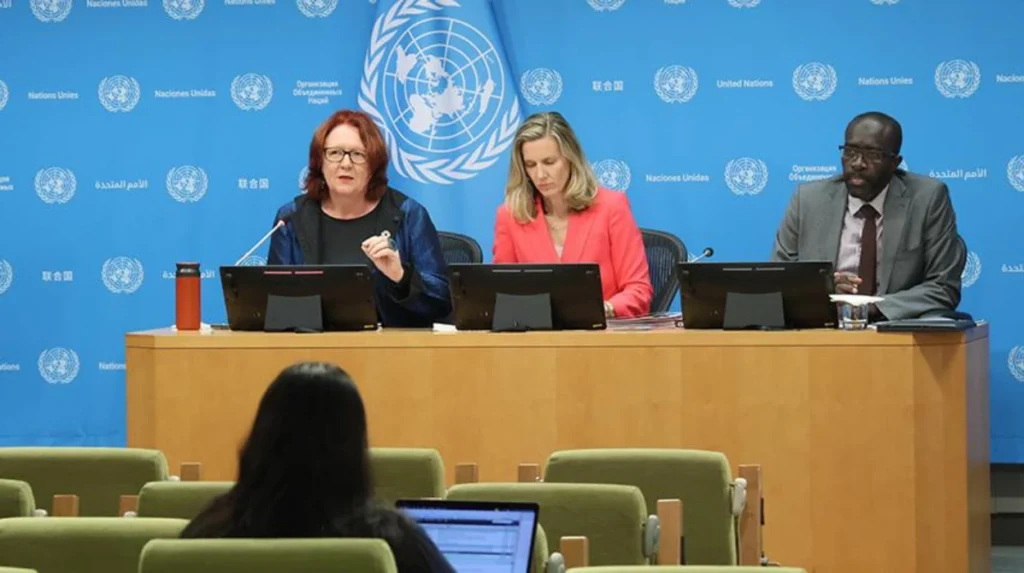
Li Junhua, the United Nations Under-Secretary-General of Economic and Social Affairs recently warned that unless digital divides are being bridged, the achievements of the 2030 development goals will be compromised. Digital marginalization supports income inequalities, which consequently have impacts on governance capacity and social cohesion.
Inclusive digital economies hold the power of being stabilizers in the fragile regions by creating income streams and cross-border trade connections. On the contrary, long-term marginalization may be manipulated by malicious parties with the help of misinformation and cyber control of disadvantaged segments of the population.
Multilateral Forums And Declarations
The 2025 international conferences have continued to focus more on women in digital transformation strategies. The policy makers associated remote working and AI-based industries with the economic mobility of women at the World Summit on Social Development. On the same note, gender-targeted digital goals have been integrated into wider competitiveness agendas via regional economic forums in Europe and Middle East.
The Manama Declaration that appeared as a result of the World Entrepreneurs and Investment forum accentuated the involvement of women in green and blue economy, and made technology a path between sustainability and enterprise. Such talks represent a change in perception between viewing women as participants as a social goal to a strategic growth multiplier.
Investment In Skills And Care Economies
The Gender Snapshot 2025 of UN Women highlighted the fact that digital skills and care infrastructure investment would have a long-term payoff much higher than the initial investment. It has been estimated that the benefits will reach into the hundreds of trillions around the world by the mid century as long as the labor participation and productivity disjunctures are reduced significantly.
Digital literacy programs are now centered around AI literacy, cybersecurity literacy, and international e-commerce. Such capabilities are crucial as the global supply chains are digitalized and the exports of remote services are increased. To most developing economies, women are an untapped source of talent that can be used to fast-track the export of digital services.
Financial Inclusion And Digital Identity
The access to digital financial systems is one of the enablers. M-payment platforms have already shown revolutionary possibilities in certain regions of Africa and South Asia. The inclusion of women in these ecosystems enhances credit report, increases the lending capacity, and eases the cross-border transactions.
Inclusion is further boosted by the use of digital identity systems which are currently being rolled out in various regions in 2025. It has been estimated that a wholesale digital ID usage would bring trillions of economic value to the table by formalizing informal economic activity. To women entrepreneurs who are not in the normal banking structures, such tools offer entry to the regulated markets.
Measuring Progress And Remaining Gaps
Measurement issues are still present, regardless of the growing momentum. There are usually differences in the qualitative dimensions of usage, digital literacy, and platform integration that is obscured by aggregate connectivity statistics. Gender-disaggregated data has become a demand of policymakers to estimate the impact.
Furthermore, national strategies can provide statements of intent on inclusion but the execution is often slow because of financial limitations or other political pressures. Long-term funding and regulatory consistency will be of the essence, should the proposed 5-trillion opportunity become a reality and not a dream.
Women’s digital inclusion now sits at the intersection of economics, technology, and geopolitics. As nations refine digital strategies amid intensifying technological competition in 2025, the scale of unrealized productivity tied to gender gaps has become harder to ignore. Whether inclusive frameworks become embedded in infrastructure rollouts and AI governance models may determine not only growth trajectories but also the contours of influence in an increasingly digital global order.