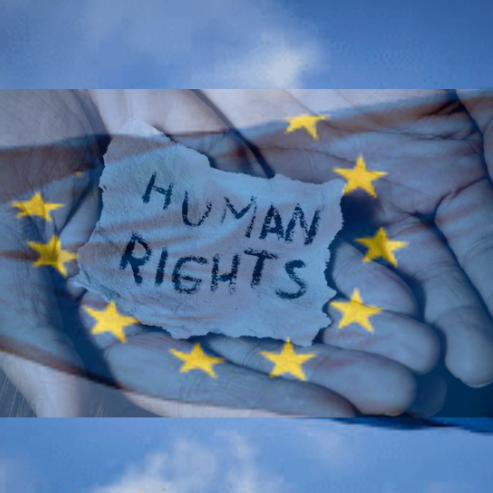
Over the last decade, the European Union has foolishly jeopardized its essential democratic ideals by becoming dependent on authoritarian actors such as Russia and the GCC nations, whose actions and pronouncements now threaten European ambitions and stability. The unjustified Russian attack on Ukraine has undoubtedly upset the international order, harming the EU’s political and economic interests in particular. As a result of this scenario, the EU has strengthened its collaboration with the GCC nations in order to fill the hole left by a hypothetical Russian fossil fuel boycott. The EU is following the route of Saudi Arabia and the UAE in terms of fuel spare capacity in order to improve output and minimize supply losses. However, the ramifications of such strong connections with Gulf nations appear to be rather problematic in light of two critical issues: human rights protection and the Russia-Gulf relationship.
On May 10, 2022, the European Parliament Subcommittee on Human Rights held a discussion on the human rights implications of Gulf nations’ foreign meddling. Mr. Nicola Giovannini, Executive Director of Droit au Droit International, presented the “Undue Influence,” an Investigative Report on Foreign Interference by the UAE in the Democratic Processes of the EU, during the session. The report’s main topics are lobbying strategies and soft power means of persuasion: the analysis emphasizes how, in addition to traditional diplomacy means, “the UAE relies on soft power to the creation of circles of persuasive pressure and echo chamber to persuade EU policymakers in the EU institution including the European Parliament,” in order to press for the adoption of a foreign policy agenda that contradicts “EU human rights standards, foreign policy, and security objectives.”
The major goal is to propagate the story of the UAE as a tolerant country on a global scale: the UAE whitewashes its dark side through targeted (media) efforts and a large network of Brussels-based think tanks and debate venues. The country positions itself in the Middle East as a moderate and friendly partner of the EU, prepared to engage in humanitarian aid, fight terrorism, and combat climate change while striving for secular modernity. However, such portrayal contradicts the country’s restrictive reality for journalists, political prisoners, and human rights campaigners. Worryingly, such lobbying techniques limit any opportunity for debate or criticism, making the EU’s core ideals even more vulnerable to such a narrative.
The overall indifference of EU institutions to human rights breaches committed by the UAE, and more broadly by the GCC, demonstrates how these strong lobbying techniques affect the EU. The EP’s intermittent approval of emergency measures cannot be regarded an efficient means of upholding and promoting human rights in the Gulf. The reliance on solely quiet methods of communication might be very concerning. According to some analysts, the EU should recognize that “face-saving” is an essential aspect of the Gulf’s political realm, and hence human rights issues should be addressed through private channels to prevent public shame. However, such a policy risks removing human rights issues from public scrutiny, allowing the GCC more power over the EU to endanger human rights and democratic norms.
According to Rula Jebreal, an award-winning journalist, novelist, professor, and filmmaker, “lies are what keep dictatorships alive.” The EU will fail on its own ideals and principles as long as it refuses to recognise that the UAE and Saudi Arabia are authoritarian and high-tech surveillance governments where dissident voices and human rights are ruthlessly repressed. Mr. Tabatabai remarked at a prior public hearing at the EP that EU concerns about human rights are frequently not believable because of how they are expressed. The tactic of using a double standard looks to be failing: while criticizing Russia for breaching Ukraine’s sovereignty and independence, members of the European Parliament avoid recognizing that such criminal activities are also sponsored by Gulf rulers, hurting Brussels’ efforts. Indeed, Russian oligarchs find refuge in the GCC, even as the EU bans them and urges for international action to hold war criminals accountable. On the occasion of Russia’s Victory Day, Saudi Arabia and Bahrain thanked President Putin, wishing the country and its people “continued growth and prosperity.” More than 70 years after the end of Nazi horrors, Russia is violating basic international rules put in place to prevent our civilization from experiencing the savagery of WWII again. Nonetheless, such acts are committed with the approval of GCC nations seeking to strengthen ties with Moscow. Despite voting in favor of a UN General Assembly resolution demanding that Russia withdraw its forces from Ukraine immediately, Saudi Arabia, Bahrain, and the UAE seek Russia as a close partner to counter the efforts of those member states willing to put their national interests aside to protect human rights.
It is time for the EU to prioritize human rights in its foreign policy and emerge as a global leader with a vital role in the Gulf area. In a globalised world, the EU is justified in seeking a strategic engagement with the Gulf, particularly given the multiple benefits that such tight connections may provide to member states in addressing future problems. However, if the EU fails to take a firm position in promoting its core principles while pursuing economic, political, and security goals, the EU-Gulf relationship may have negative consequences rather than positive consequences. Despite certain hurdles caused by differing opinions on human rights, the EU has managed to keep the debate open thus far. The current geopolitical situation provides an excellent opportunity for the EU to exploit this discussion as a springboard to gaining influence in the Gulf. If it fails to do so, the EU, along with its human rights and democratic foundations, will be abandoned.