
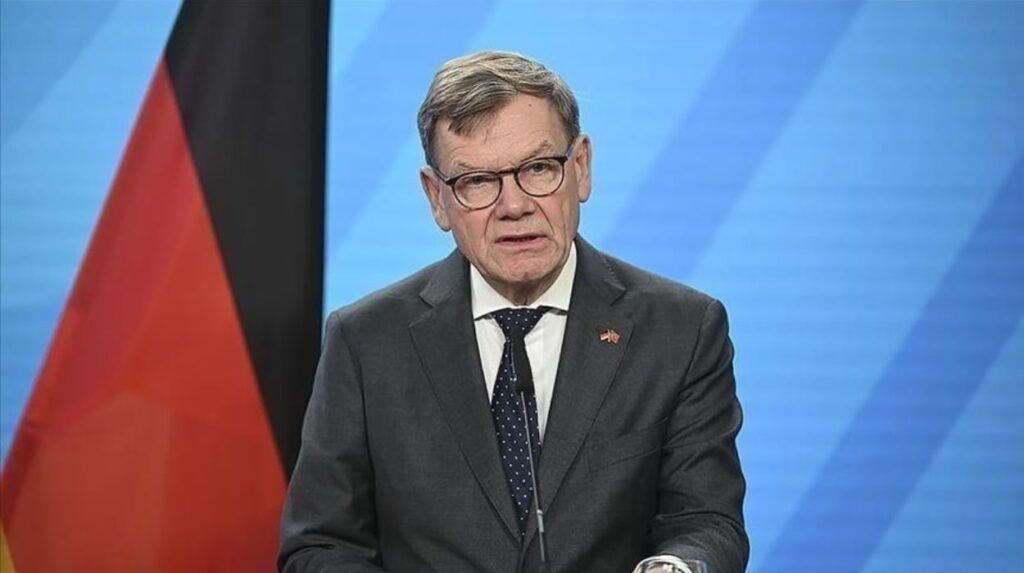
Germany’s decision not to join military strikes on Iran reflects a structural combination of constitutional constraints, limited regional infrastructure, and calibrated risk assessment. On March 1, 2026, Foreign Minister Johann Wadephul stated that Berlin lacks the necessary regional bases or operational resources to participate in offensive operations, effectively ruling out direct involvement in the US-Israel campaign.
This position emerged as the US and Israel intensified strikes across Iranian territory, raising pressure within NATO circles to clarify roles. Yet Germany’s restraint is not framed as neutrality. Instead, it reflects a deliberate separation between diplomatic alignment and military participation, particularly in operations conducted beyond defensive parameters.
Absence of Forward Military Infrastructure
Germany does not maintain permanent strike-capable bases in the Middle East comparable to those used by other NATO partners. The Bundeswehr’s overseas deployments remain largely confined to training missions, maritime patrols, or multilateral stabilization efforts. This infrastructure gap limits rapid power projection.
Unlike the United Kingdom, which has historically enabled U.S. operations through regional facilities, Germany’s post-war defense posture prioritizes territorial defense and alliance commitments within Europe. As a result, Berlin’s influence in fast-moving Middle Eastern conflicts depends heavily on diplomatic channels and sanctions coordination rather than operational engagement.
2025 Deployment Priorities Reinforce the Pattern
Throughout 2025, Germany concentrated its military expansion on reinforcing NATO’s eastern flank in response to security pressures from Russia. While defense spending increased and readiness initiatives expanded, Middle East basing remained outside strategic priorities. This pattern reinforced expectations that Germany would avoid direct participation in Iranian strike operations.
The focus on European deterrence reflects a broader recalibration within Berlin’s defense planning. Resources allocated to air defense, logistics modernization, and alliance integration reduce flexibility for distant expeditionary campaigns.
Constitutional Law Anchors Military Restraint
Germany’s restraint is also grounded in legal architecture embedded in its post-1949 constitutional framework. The Basic Law requires parliamentary authorization for significant foreign military deployments, ensuring that executive authority alone cannot initiate offensive operations abroad.
This legal structure introduces procedural hurdles that slow decision-making in rapidly escalating conflicts. Any participation in strikes against Iran would require Bundestag approval, detailed mission parameters, and clear constitutional justification.
Parliamentary Oversight as Strategic Constraint
The requirement for legislative consent reinforces civilian control over the armed forces. According to policy discussions referenced by Chancellor Friedrich Merz, legal uncertainties surrounding offensive participation remain significant, especially in operations that extend beyond collective defense mandates.
Germany’s leadership has emphasized that constitutional compliance is not a secondary consideration but a defining element of national security doctrine. This structure differentiates Berlin’s approach from more centralized executive war powers in other NATO states.
Lessons from Recent European Crises
During 2025 regional tensions involving drone attacks and missile exchanges in the Middle East, Germany limited its response to diplomatic condemnation and sanctions alignment. Military engagement remained confined to defensive postures and alliance coordination.
This pattern demonstrates continuity rather than improvisation. Berlin’s approach favors multilateral legal frameworks and United Nations mechanisms over unilateral military escalation, even when strategic interests overlap with allies engaged in kinetic operations.
Escalation Risks and Regional Spillovers
Germany’s restraint also reflects concern over escalation chains that could draw European territory or assets into broader confrontation. Iranian ballistic missile capabilities, cyber operations, and proxy networks create indirect risks for European security, even if the immediate battlefield lies elsewhere.
Wadephul characterized Iran as a “considerable threat” in terms of missile reach and regional destabilization, yet emphasized diplomatic containment and de-escalation. This dual framing—recognizing risk while avoiding direct engagement—illustrates Germany’s attempt to balance deterrence with restraint.
Balancing Solidarity and Stability
Chancellor Merz expressed support for limiting Iran’s nuclear and missile capabilities while underscoring preference for negotiation. This alignment with US and Israeli objectives reflects policy convergence, but operational divergence remains clear.
Germany’s approach allows it to participate in sanctions regimes and diplomatic coalitions without crossing into offensive military roles. This separation maintains alliance cohesion while preserving national legal boundaries.
Regional Actors and Diplomatic Channels
Neighboring states, including members of the Gulf Cooperation Council, have expressed concern about escalation spillover. Diplomatic coordination among regional actors continues to emphasize containment rather than expansion of conflict.
Germany’s position aligns with this broader preference for de-escalation, reinforcing diplomatic pathways even amid military developments. By abstaining from strikes, Berlin retains credibility as a mediator within European frameworks.
Divergence Within the E3 Framework
Germany’s stance highlights differences within the E3 grouping of Germany, France, and the United Kingdom. While the trio has jointly addressed nuclear diplomacy issues in previous years, their operational postures differ significantly in the current crisis.
The United Kingdom’s regional infrastructure has enabled support roles in U.S.-led operations, whereas Germany and France have confirmed non-participation in offensive strikes. This divergence does not indicate alliance fracture, but it underscores varied national doctrines within NATO.
Transatlantic Coordination and Limits
NATO leadership has framed the strikes as necessary for regional security, yet individual member states retain sovereign discretion. Germany’s approach demonstrates that alliance solidarity does not automatically translate into operational involvement.
The result is a layered defense architecture in which political alignment coexists with differentiated military engagement. Such complexity reflects the evolving nature of transatlantic security governance.
Strategic Autonomy Within Alliance Structures
Germany’s restraint also signals a broader European discussion about strategic autonomy. While Berlin remains deeply integrated into NATO structures, it seeks to ensure that external conflicts do not redefine its constitutional identity or military scope.
This posture does not exclude future participation in defensive alliance operations. However, it establishes clear thresholds for engagement, particularly in regions where Germany lacks permanent infrastructure.
Implications for Regional Stability and Alliance Dynamics
Germany’s decision not to join strikes on Iran may influence broader escalation calculations. By signaling limits, Berlin reduces the likelihood of automatic alliance-wide participation in offensive campaigns.
This stance may encourage continued diplomatic engagement, even as military operations proceed elsewhere. It also demonstrates that NATO cohesion can tolerate differentiated roles without collapsing into fragmentation.
Defense Versus Offensive Doctrine
Germany’s strategic restraint reinforces a doctrine centered on collective defense rather than expeditionary force projection. This distinction remains central to post-war German security policy.
The legal and logistical framework ensures that any departure from this posture would require explicit political consensus and structural preparation. Such thresholds function as stabilizing mechanisms in periods of high tension.
Regional Balance and Future Scenarios
As the conflict environment evolves, Germany’s approach will likely continue to prioritize sanctions coordination, humanitarian assistance, and diplomatic mediation. Whether escalation widens or narrows will depend on external developments rather than Berlin’s operational entry.
Germany’s strategic restraint therefore represents a deliberate calibration of capability, law, and alliance politics. It preserves institutional continuity while acknowledging external threats. The key question moving forward is whether this balance remains sustainable if regional dynamics intensify further, or whether shifting security conditions will eventually test the boundaries of Germany’s constitutional and infrastructural limits in ways not yet confronted.