
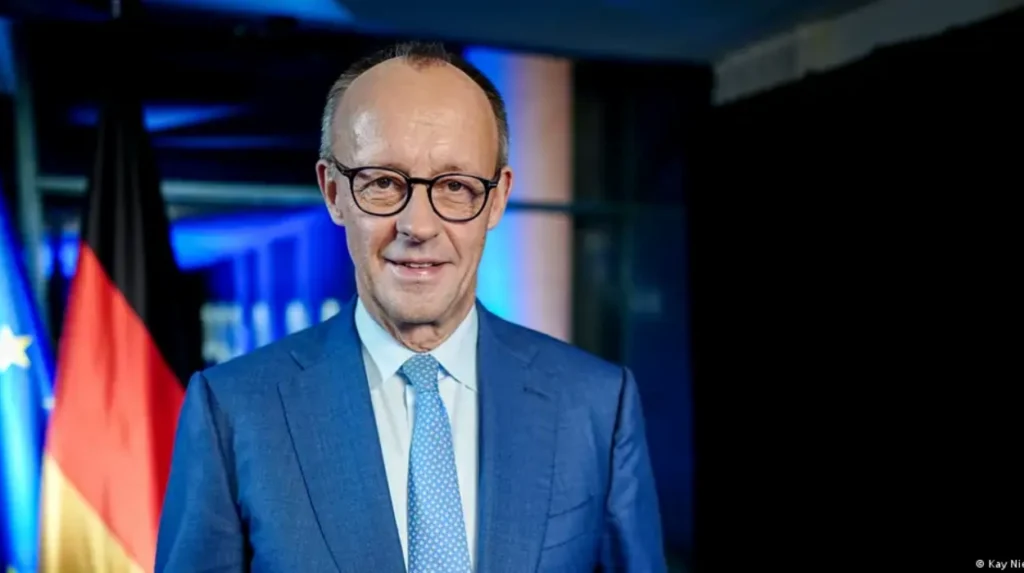
Germany’s Chancellor Friedrich Merz has called for Europe to assert its interests more forcefully in 2026 to secure peace and prosperity amid escalating threats. This statement, delivered in his annual New Year’s address on December 31, 2025, underscores a pivotal moment for European strategic autonomy.
Russian aggression threat
Russian aggression represents the most immediate peril to Europe’s stability, as articulated by Chancellor Merz, who described the ongoing war in Ukraine as a” terrible” conflict directly hanging international freedom and security. Merz emphasized that Russia’s conduct form part of a deliberate plan targeting the wholeness of Europe, with Germany passing diurnal sabotage, spying, and cyberattacks as substantiation of this broader strategy. Since Russia’s full- scale irruption of Ukraine in February 2022, Europe has faced unknown mongrel warfare tactics, including energy compulsion through disintegrated gas inventories and intimation juggernauts aimed at fracturing NATO concinnity.
This aggression has impelled Europe to rethink its defense posture. Under Merz’s leadership since May 2025, Germany has boosted support for Ukraine, channelizing billions in military aid including Leopard tanks and IRIS- T air defense systems, while ramping up its own defense spending to exceed NATO’s 2 GDP target, a shift frompre-2022 hesitancy. Merz’s address frames 2026 as a” decisive time” where failure to fight Russia decisively could buoy further irruptions, potentially into the Baltic countries or Poland, invoking echoes of the 1930s conciliation failures. Europe’s response must prioritize bolstering eastern hand defenses, accelerating security products under the European Defence Industry Strategy, and icing unwavering consistency to discourage Moscow’s revanchism.
The profitable risk exacerbates the security challenge. Russia’s weaponization of energy exports led to a 2022 gas extremity that shaved 1- 2 off EU GDP growth, forcing diversification to LNG from Norway and the US. Merz’s call for assertion signals a need for Europe to develop indigenous capabilities, similar to Germany’s Zeitenwende defense overhaul, to alleviate vulnerabilities. Without robust deterrence, peace in 2026 remains illusory, as Putin’s governance views European schism as an assignation for expansionism.
Global protectionism pressures
Global protectionism poses a stealthy but profound threat to Europe’s substance, with Merz pressing how dependence on imported raw accoutrements is decreasingly abused as a political armament. This notice targets China’s dominance in critical minerals like rare worlds( over 90% of global force) and cobalt, where Beijing’s import restrictions in late 2023 disintegrated European battery products for electric vehicles. Amid a decelerating Chinese frugality and retaliatory tariffs, Europe’s import-aware model accounting for 47% of GDP is under siege, compounded by domestic recession in Germany, which contracted in 2023 and 2024.
Merz’s reflections align with the EU’s Critical Raw Accoutrements Act of 2024, aiming for 10 domestic births by 2030, but perpetration lags due to nonsupervisory hurdles and green permitting detainments. Protectionism from the Global South, similar to India’s subventions distorting sword requests, further erodes competitiveness. To assert interests, Europe must negotiate bilateral deals, like the EU- Mercosur trade pact stalled in 2019, and invest in” friendshoring” with abettors like Australia for lithium.
Substance hinges on adaptability. The US Affectation Reduction Act’s subventions allured€ 50 billion in European investments across the Atlantic by 2025, emphasizing the need for a European original, maybe an expanded NextGenerationEU fund. Merz envisions 2026 as a pivot toward tone- reliance, reducing vulnerability to weaponized interdependence that protectionism amplifies.
Shifting US ties dynamics
Changing relations with the United States, particularly under President Donald Trump’s second term since January 2025, demand European self-assertion, as Merz noted the erosion of America’s role as the “reliable guarantor” of security. Trump’s “America First” policies, including threats of 10-20% universal tariffs and demands for NATO allies to pay more, have strained transatlantic bonds, with his past criticisms of Germany’s defense spending resurfacing. Merz’s address urges confidence over fear, positioning Europe to defend interests independently amid potential US withdrawal from Ukraine aid, which totaled $175 billion by mid-2025.
This shift revives debates on strategic autonomy. The EU’s 2025 White Paper on Defense proposes a 500,000-strong rapid-fire response force, but interoperability remains fractured without US command structures. Bilateral conflicts, like Trump’s sword tariffs impacting German automakers, necessitate diversified hookups, similar as AUCUS- inspired tech sharing with Indo- Pacific abettors . Merz’s visionary station since May visiting Kyiv and Washington signals Germany’s leadership in bridging divides.
For 2026 prosperity, Europe must hedge. Strengthening the Weimar Triangle with France and Poland, alongside increased LNG imports from Qatar, buffers against US unreliability. Merz’s optimism frames this as empowerment, transforming dependency into partnership on equal terms.
Germany’s leadership role
Chancellor Friedrich Merz, assuming office in May 2025 after the CDU’s election victory, has positioned Germany as Europe’s linchpin for assertion. His chancellorship marks a departure from Scholz’s caution, with Berlin spearheading Ukraine support through €28 billion in aid and a 100-billion-euro defense fund activated in 2022. Merz’s New Year’s speech, pulling “no punches” on threats, reflects his conservative roots and business background, advocating “new strength” for reconnection with peace and prosperity.
Domestically, Merz tackles stagnation via the “Deutschlandwende” agenda: tax cuts, deregulation, and €500 billion in infrastructure by 2030. This economic revival funds defense hikes to 3% GDP, addressing Bundeswehr readiness gaps exposed by the Ukraine war. Internationally, his diplomacy hosting a 2025 Ukraine Reconstruction Conference amplifies Europe’s voice.
Merz’s vision demands consensus-building. Franco-German tensions over nuclear energy and fiscal rules test leadership, yet his address rallies for unity, making Germany the fulcrum for 2026 resolve.
Europe’s strategic pathways
To operationalize assertion, Europe requires a multifaceted strategy blending deterrence, diversification, and diplomacy. On security, scaling the European Peace Facility to €50 billion annually and procuring joint platforms like the Future Combat Air System fortify capabilities. Economically, the EU Chips Act’s €43 billion investment counters protectionism, aiming for 20% global semiconductor share by 2030.
Diplomatically, engaging the Global South via the EU-Africa Green Deal mitigates raw material risks. Merz’s confidence-driven approach prioritizes agency, avoiding paralysis from US uncertainties. Institutional reforms, like qualified majority voting on foreign policy, streamline responses.
Pathways converge on innovation. Horizon Europe R&D funding (€95 billion) drives green tech leadership, ensuring prosperity amid adversity.
Prospects for 2026 peace
2026 holds transformative potential as Merz’s “year of new beginnings,” reconnecting Europe with decades of peace if assertion prevails. Success metrics include Ukraine’s frontline stability, diversified supply chains reducing China exposure below 30%, and NATO spending compliance by 23 allies. Risks persist Russian escalation or Trump tariffs could trigger recession but proactive measures like the Stability Pact for Ukraine promise resilience.
Merz’s address catalyzes momentum, with Germany’s EU Council presidency in early 2026 advancing defense union. Prosperity follows security; assertion ensures both, forging a sovereign Europe.