
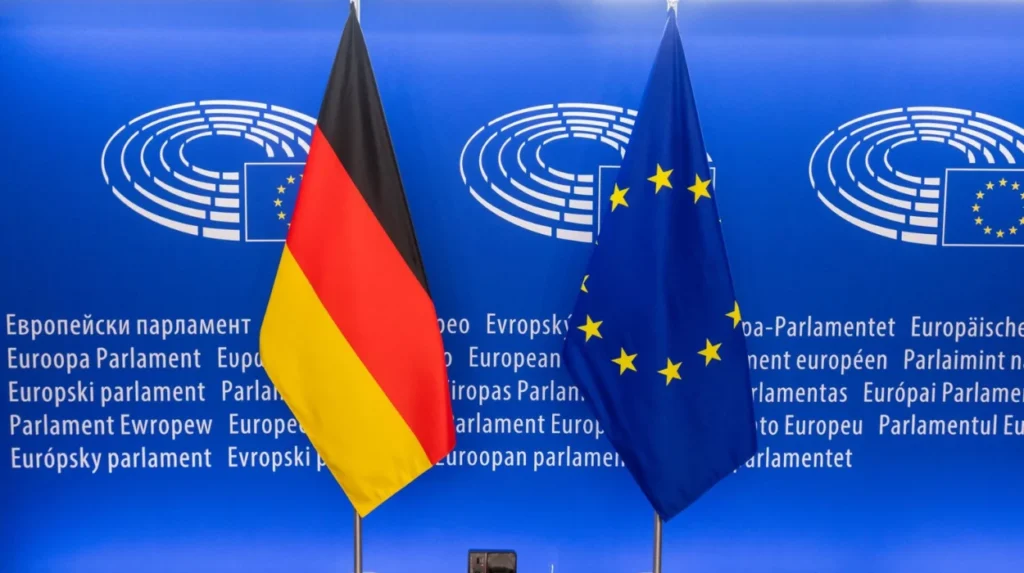
Germany’s public opinion underscores a strong commitment to European integration as the federal government’s top foreign policy priority, with 54% of citizens highlighting strengthening European cohesion in a recent Forsa survey for “Internationale Politik.” This figure, down slightly from 57% in February, still dwarfs other priorities like defense enhancement at 37%. The survey reflects broader geopolitical anxieties amid Ukraine support waning to 7% and rising concerns over authoritarian influences.
Survey overview
The Forsa survey, conducted representatively for the magazine “Internationale Politik,” captures German sentiments on foreign policy tasks as of late 2025. Over half of respondents precisely 54% prioritize bolstering European cohesion, a stance that outpaces all alternatives by significant margins. This marks a three-percentage-point dip from February’s poll, yet it reaffirms Europe’s centrality in public minds despite domestic economic strains and global shifts. Released around December 29, 2025, the data from sources like DPA and europeannewsroom.com highlights how citizens view EU unity as foundational amid fracturing transatlantic ties and autocratic pressures.
Public prioritization aligns with longstanding pro-European leanings, though nuances emerge in comparative polls. For instance, Körber Foundation surveys indicate 78% see EU relations positively, yet divisions persist on enlargement and defense roles. Forsa’s methodology ensures representativeness, polling diverse demographics to reflect national mood accurately. This snapshot, amid 2025 Bundestag election rhetoric, pressures policymakers to align actions with voter emphasis on continental solidarity over bilateral adventures.
Historical context
German affinity for European cohesion traces to post-WWII reconciliation, evolving through Maastricht Treaty debates into today’s fiscal union struggles. Polls like Forsa’s echo patterns from Körber’s Berlin Pulse, where 71% once deemed alliance security paramount, but EU focus endures. The 3% drop from February signals subtle fatigue, possibly tied to Ukraine aid backlash down from 17% to 7% as economic woes from energy crises linger. Historically, surveys post-2004 enlargement showed splits (47% yes, 46% no), yet cohesion advocacy persists as a bulwark against nationalism.
In the 2020s, Russia’s Ukraine invasion amplified calls for unity, with EM Germany noting 66% wanting Europe central in the 2025 elections. Forsa’s consistency across years topping charts repeatedly contrasts with fluctuating U.S. views, where 73% rate transatlantic ties poorly. This historical tilt informs why 54% now anchor policy wishes in Brussels, viewing fragmented Europe as vulnerable to Beijing and Moscow. Precedents like Schengen defenses (63% pro-open borders) reinforce this, per December 2024 Forsa data.
Comparative priorities
Defense capability ranks second at 37%, up amid NATO spending debates, while curbing autocracies claims 28%. Climate protection slips to 23%, Global South ties hold at 20%, revealing a security-first pivot. Ukraine support’s plunge to 7% starkly contrasts February, signaling donor fatigue in a nation grappling with inflation and migration. Körber polls align, with only 32%-43% backing defense hikes, prioritizing European over U.S. pacts.
EM Germany’s 66% election focus on Europe exceeds Forsa’s task ranking, suggesting broader appeal. Defense’s rise mirrors Körber’s 65%-74% NATO positives, yet restraint prevails over zeal.
Geopolitical drivers
Russia’s aggression and China’s assertiveness propel cohesion demands, as 28% target autocratic sway. Post-2022 invasion, Germany pivoted to EU defense autonomy, with surveys like Körber showing 78% viewing U.S. ties badly. Forsa captures this: Europeans unite against hybrid threats, from migration to corruption. Global South outreach at 20% nods to multipolarity, yet Europe trumps Indo-Pacific gambits.
Ukraine fatigue reflects costs €billions in aid yielding to domestic priorities, per 7% low. EM Germany warns of Schengen erosion, with 63% valuing open borders for prosperity. Körber notes 38% favor U.S. over Russia ties, underscoring EU as a hedge. Autocracy limits ties to enlargement hopes, deemed security boosters. These drivers cement 54% cohesion vote, framing Europe as Germany’s shield in turbulent 2026.
Policy implications
Berlin must operationalize this mandate via EU leadership, per EM Germany’s “European plan” call. Scholz-era hesitance yields to post-election urgency, with Forsa pressuring Bundestag contenders. Defense at 37% demands 2% GDP compliance, paired with PESCO deepening. Climate’s 23% aligns with the Green Deal, but autocracy curbs necessitate Magnitsky sanctions amplification.
Ukraine’s 7% signals recalibration sustained but not blank-check freeing bandwidth for cohesion. Körber’s restraint lean (50% against defense hikes) tempers Zeitenwende. Implications include veto-proofing EU fiscal tools, countering AfD/BSW euroscepticism. Global South 20% pushes fair trade, balancing China risks. Overall, 54% dictates proactive federalism.
Public opinion trends
Forsa’s 54% continues upward trajectory from pre-2022 lows, resilient despite 3% dip. Körber tracks divisions 47/46 on enlargement but cohesion unites. EM Germany’s 66% election centrality exceeds, signaling 2025 vote salience. Defense climbs with threats, yet only 32% want spending surges. Ukraine reversal mirrors polls elsewhere, fatigue universal.
Demographics likely skew younger/educated pro-EU, per Forsa representativeness. Reddit federalist debates highlight dominance worries, but surveys affirm buy-in. Social cohesion ratings at 61% negative indirectly bolster EU appeal. Trends forecast sustained primacy into 2026, barring shocks.
Future outlook
The future outlook for Germany’s foreign policy, anchored by the 54% public prioritization of European cohesion in the Forsa survey, signals a pivotal shift toward assertive EU leadership under a potential Merz-led government post-2025 elections. Friedrich Merz, as CDU leader, has championed a “European Germany” vision, emphasizing fiscal discipline and strategic autonomy that aligns with voter demands for unity amid transatlantic uncertainties.
This positioning could galvanize Berlin’s role in deepening integration, from joint debt mechanisms to a common defense pillar, fortifying the bloc against external fractures. However, risks loom large: persistent recessionary pressures, with Germany’s 2025 GDP growth projected below 1% due to energy costs and industrial slowdowns, threaten to erode this support. The stagnant 20% emphasis on Global South ties in the Forsa poll underscores vulnerability economic woes could fuel AfD-style isolationism, diverting focus from Brussels to bilateral deals.
Opportunities abound if leveraged adeptly. A negotiated Ukraine endgame, potentially by mid-2026, could catalyze Eastern enlargement, incorporating Ukraine, Moldova, and the Western Balkans into an expanded EU, fulfilling 66% of EM Germany’s polled desires for a geopolitically robust Europe. Körber Foundation data reveals two-thirds of Germans view NATO positively, providing a hybrid defense backbone that complements EU cohesion without overreliance on Washington.