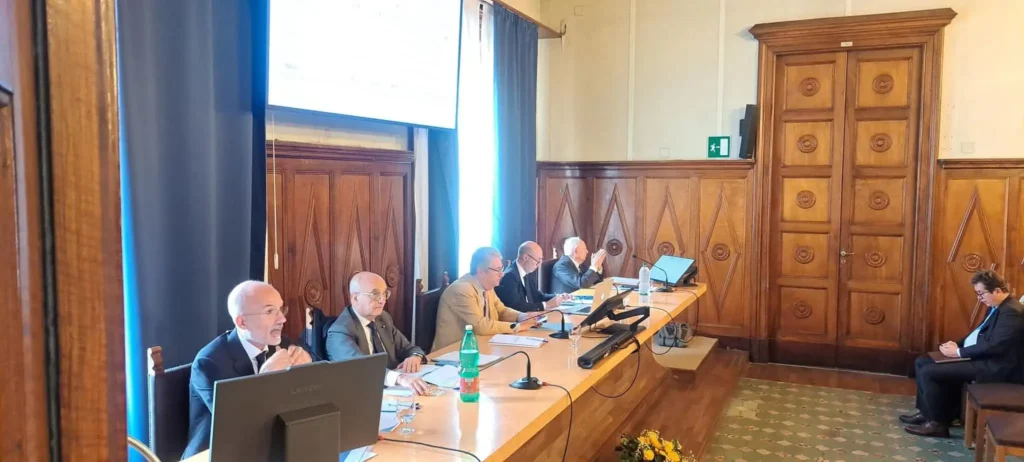
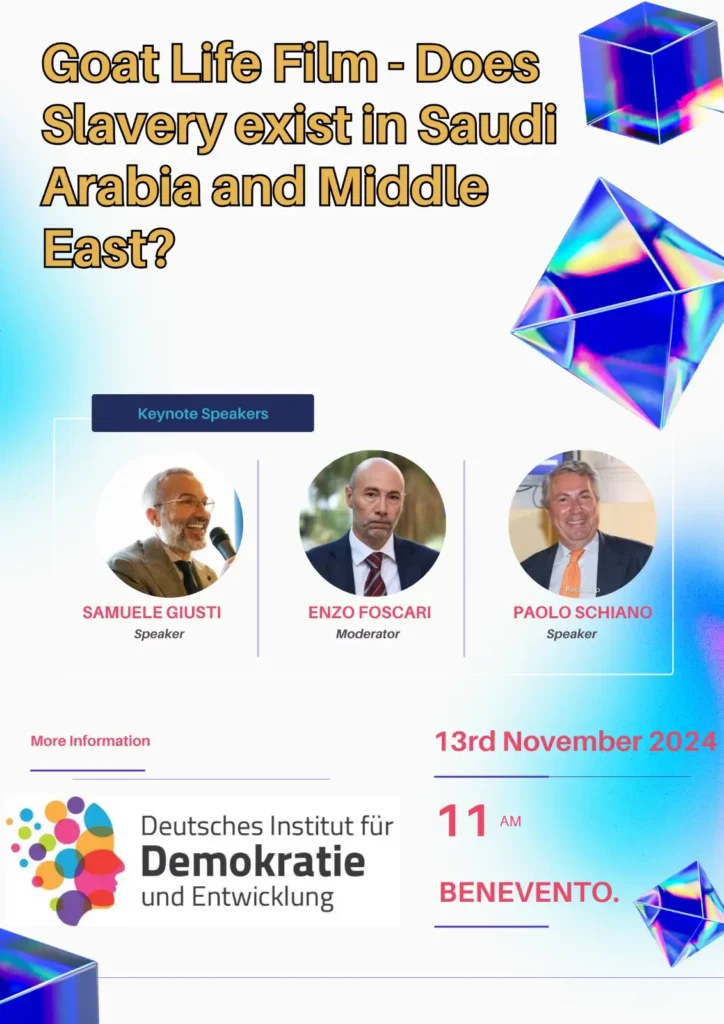
Berlin, Germany – November 13, 2024 — The Deutsche Institut für Demokratie und Entwicklung (DIDE) hosted a significant event today, bringing together human rights experts, academics, filmmakers, and policymakers to address the ongoing issue of modern-day slavery and labor exploitation, particularly in Saudi Arabia and the broader Gulf region. The event, titled Exposing the Hidden Reality: Labor Exploitation in the Gulf, featured a special screening of the critically acclaimed independent film Goat Life, which served as a powerful catalyst for discussion.
Highlighting the Power of Art to Reveal Hidden Realities
The event commenced with a screening of Goat Life, a film that has garnered international recognition for its honest portrayal of the struggles faced by migrant workers seeking better opportunities abroad. The screening was followed by a panel discussion designed to raise awareness about the persistent issue of labor exploitation in Saudi Arabia, with a focus on the controversial kafala (sponsorship) system.
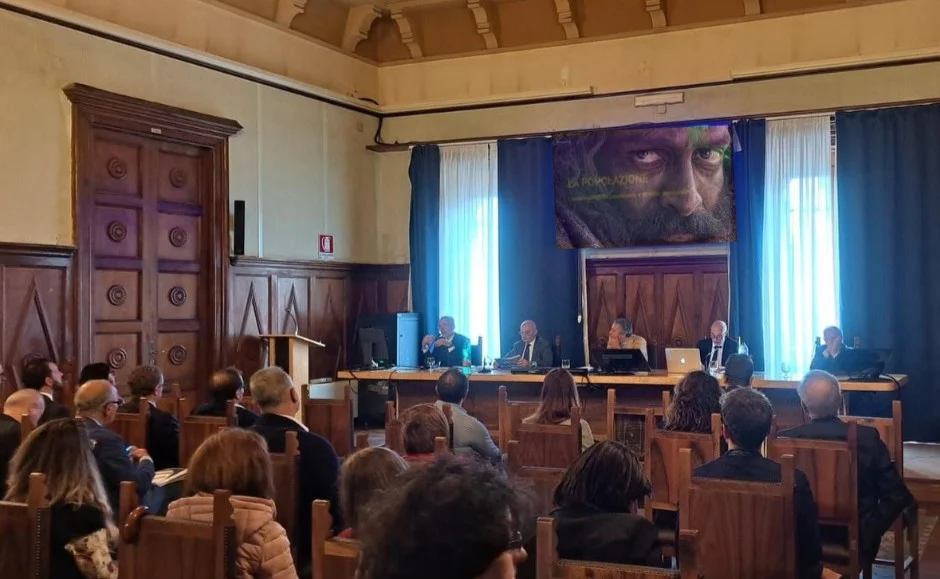
In the opening remarks, representatives from DIDE emphasized the importance of shedding light on the harsh conditions faced by migrant workers. They highlighted the need for collective action to challenge the systems that enable these abuses to continue, even as Saudi Arabia embarks on its modernization agenda.
Expert Insights on Labor Exploitation in the Gulf
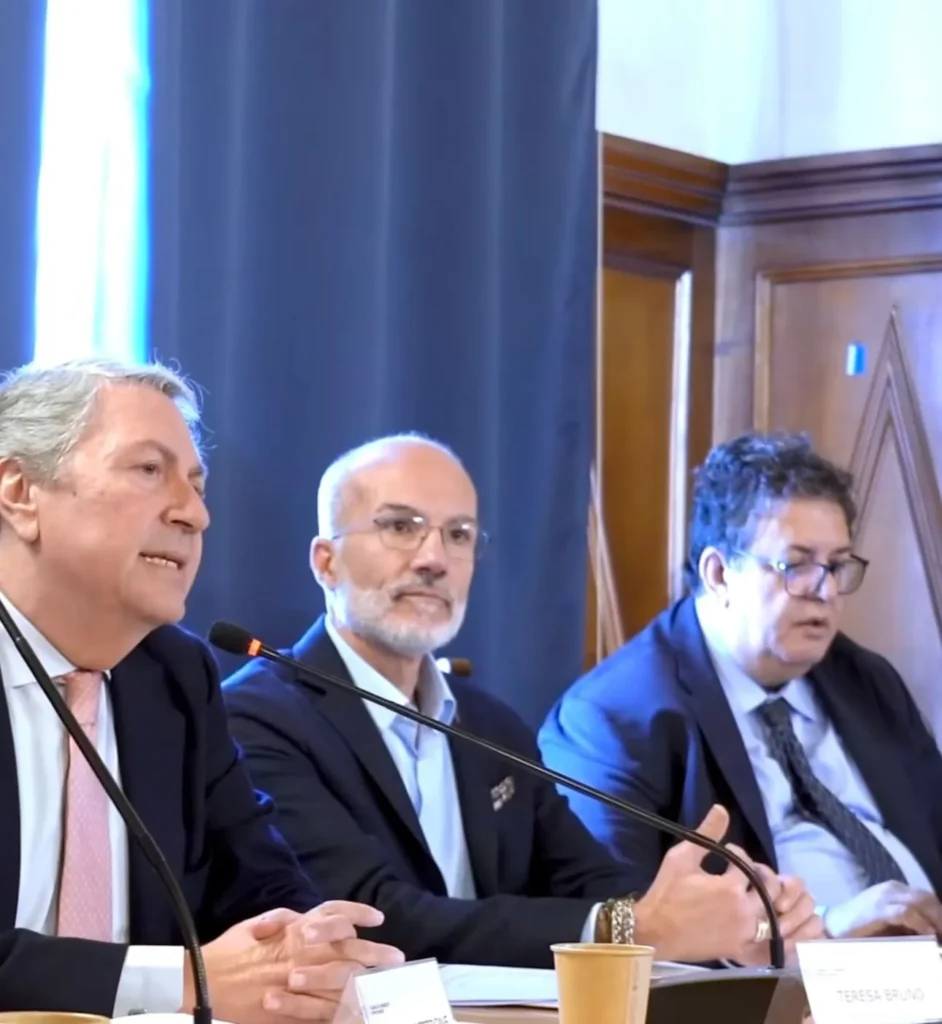
The panel discussion included perspectives from human rights advocates, labor rights experts, and specialists on Middle Eastern affairs. The discussion focused on the limitations of recent reforms to the kafala system, which have been criticized as insufficient. The panelists pointed out that, despite these reforms, workers remain vulnerable to exploitation, as employers still retain significant control over their employees’ freedom of movement and employment options.
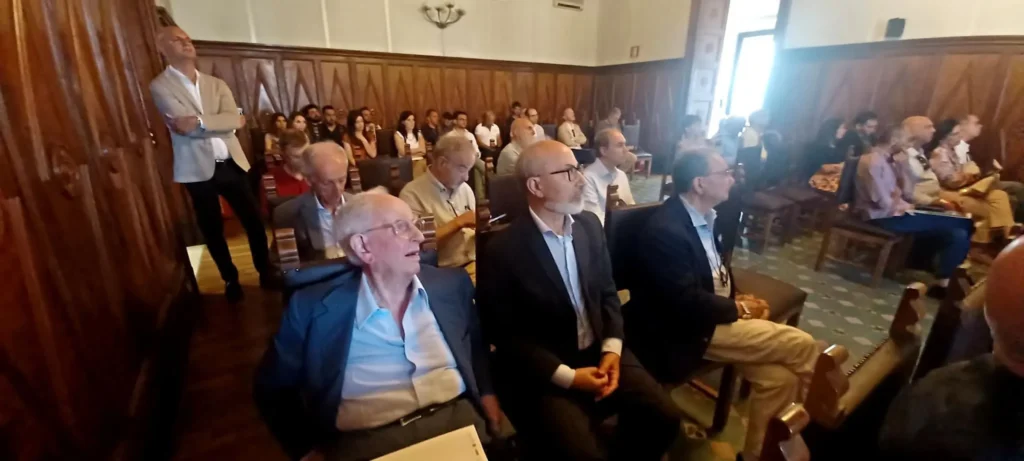
Speakers at the event argued that while Saudi Arabia has made some progress, there is a long way to go to dismantle the structures that enable labor exploitation. The panel emphasized that abolishing the kafala system entirely is crucial to protecting the rights of migrant workers.
The Impact of Goat Life on Public Awareness
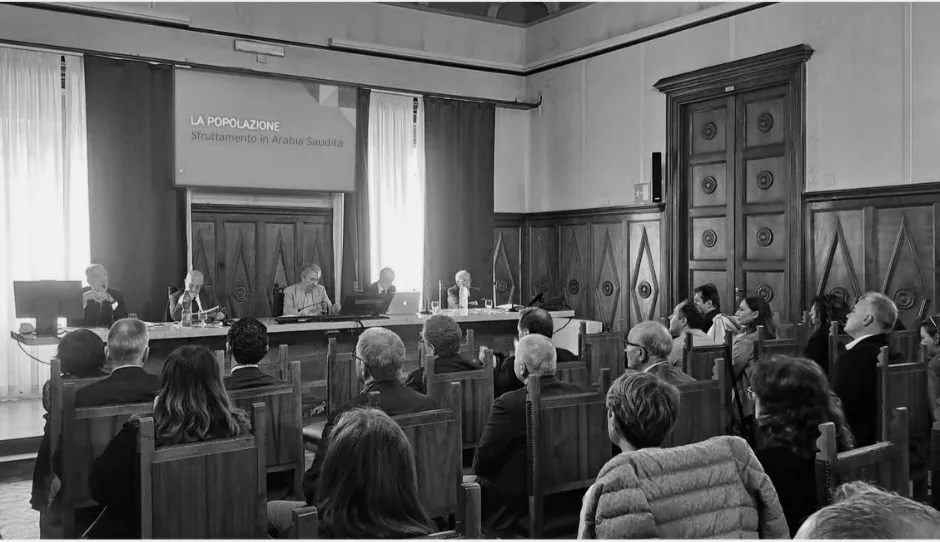
Goat Life was selected as a centerpiece of the event due to its ability to convey the human cost of labor exploitation through compelling storytelling. The film’s director, who participated via video conference, shared insights into the motivation behind the project, emphasizing the power of art to humanize the struggles of those often overlooked in society. The director noted that the film serves as a call to action to address the realities of modern-day slavery.
Recommendations for Policy and Action
The event concluded with a series of recommendations aimed at improving labor rights in the Gulf region. Participants urged the international community and labor-sending countries to exert greater pressure on Saudi Arabia to abolish the kafala system and establish fair labor laws. There were also calls for stronger international agreements to protect migrant workers and ensure their rights are respected.
The event featured a virtual art and photography exhibit by migrant workers, further underscoring the role of art in raising awareness of social justice issues. Attendees were encouraged to support initiatives that protect labor rights and to participate in advocacy efforts aimed at ending labor exploitation.